
Subheadline: President Donald Trump’s approval rating has fallen to a new second-term low in a Pew Research Center survey, while separate polling shows Democratic voters are more enthusiastic about voting in November. Rising living costs, weaker support among some Trump voters and competitive Senate races are adding pressure on Republicans.
WASHINGTON — October 12, 2026 — Fresh polling is raising serious questions about the Republican Party’s position ahead of the November 3 midterm elections, as President Donald Trump faces declining approval ratings and Democratic voters report greater enthusiasm about casting their ballots.
The latest surveys reveal several challenges for Republicans: growing dissatisfaction with Trump’s job performance, concerns about the cost of living and an apparent enthusiasm gap between voters who supported Trump in 2024 and those who backed former Vice President Kamala Harris.
A Pew Research Center survey published October 8 found that just 30% of Americans approve of Trump’s job performance, while 68% disapprove. The approval figure represents the lowest level of his second term in that survey. (Pew Research Center)
The findings arrive less than a month before voters decide which party will control Congress for the final two years of Trump’s current term.
Trump’s Approval Rating Hits a New Second-Term Low
The Pew findings suggest that dissatisfaction extends beyond Trump’s traditional political opponents.
Among voters who supported Trump in the 2024 presidential election, 67% still approve of his performance, but that figure has fallen substantially from 95% at the beginning of his second term.
Pew also found that satisfaction with the direction of the country has declined among Republicans. Just 39% of Republicans and Republican-leaning voters said they were satisfied with the state of the nation, down from 65% shortly after Trump returned to office.
The figures point to growing unease even within the president’s own political coalition.
A separate Reuters/Ipsos poll released October 5 also found Trump’s approval rating at 32%, matching the lowest level recorded by that pollster during either of his presidential terms. The survey included 4,506 U.S. adults and had a margin of error of approximately two percentage points. (Reuters)
Although approval ratings differ among pollsters because of their methods and survey timing, the recent findings point in the same direction: Trump is entering the midterm campaign’s final weeks with more Americans expressing dissatisfaction than approval.
Democratic Voters Report Greater Enthusiasm
One of the most striking findings involves voter motivation.
A Reuters/Ipsos survey released October 8 found that 48% of voters who supported Harris in 2024 described themselves as very enthusiastic about voting in the midterms, compared with just 30% of voters who backed Trump.
Harris supporters were also more likely to say they were almost certain to vote: 76%, compared with 63% of Trump supporters. (Reuters)
That difference matters because midterm elections typically attract fewer voters than presidential elections. When one party’s supporters are more motivated to participate, the disparity can influence close races.
The Pew survey found a similar pattern. Democratic candidate supporters were 17 percentage points more likely than Republican supporters to say they were extremely motivated to vote.
Among respondents who said they were highly enthusiastic about voting, 62% said they were motivated by opposing Trump, compared with 36% who were excited about supporting him.
The numbers suggest that opposition to the president is becoming an important mobilizing force for Democrats. Republicans, meanwhile, face the challenge of energizing their own voters while persuading less enthusiastic supporters that the midterm elections matter.
Democrats Open an Eight-Point Lead in the House Vote
Pew’s survey also found Democrats holding an advantage in the national congressional vote preference.
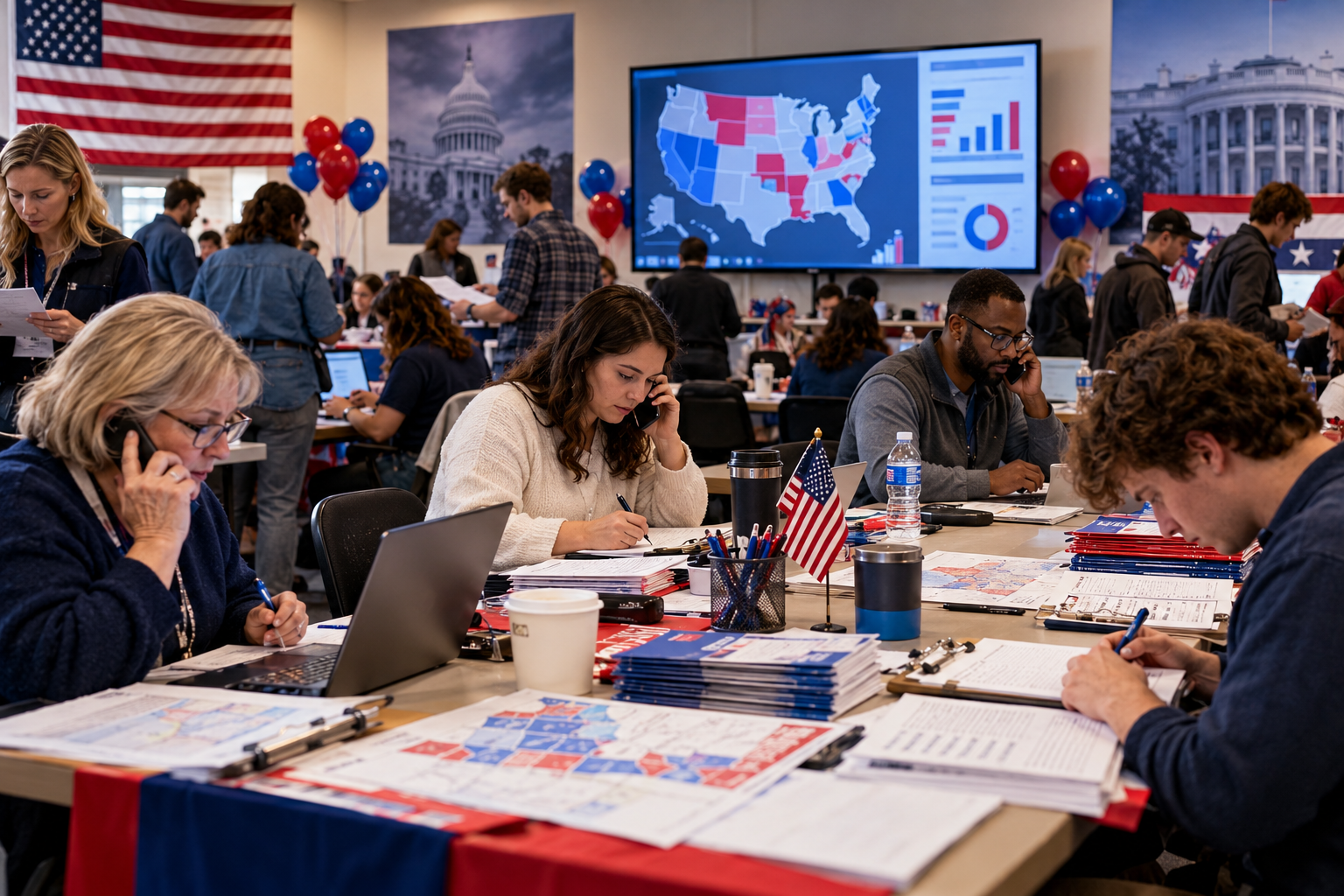
If the election were held at the time of the survey, 44% of registered voters said they would support a Democratic candidate for the U.S. House, compared with 36% who preferred a Republican. Another 15% were unsure.
That represents an eight-percentage-point Democratic lead in the national House preference measure. (Pew Research Center)
The Reuters/Ipsos survey also showed Democrats ahead nationally, with registered voters preferring Democrats over Republicans by 44% to 37%.
However, national polling does not directly translate into congressional seats. House races are determined district by district, while the Senate map includes states with very different political environments.
For Republicans, the danger is that relatively small shifts in competitive districts could determine control of the House. In the Senate, Democrats must also overcome the challenges of competing in states where Republican candidates retain substantial support.
Cost of Living Remains a Major Concern
Economic dissatisfaction is another central factor in the polling.
Pew found that 84% of registered voters considered the economy very important to their vote, making it the leading issue in the midterm elections. Concern about energy costs and gasoline prices has also increased as the conflict involving Iran has affected fuel markets.
The Reuters/Ipsos survey found that the cost of living was the most important issue for voters deciding how to cast their ballots. Trump’s approval has weakened as Americans confront higher prices for everyday goods and fuel.
These concerns create difficulties for Republicans because the president’s party is often held responsible by voters for the state of the economy.
Democrats have sought to focus their campaigns on household expenses, healthcare and economic security. Republicans, however, continue to emphasize immigration, national security and their legislative agenda.
Which issues dominate individual races could determine whether dissatisfaction with the president translates into votes for Democratic candidates.
Republicans Face Difficult Choices in Battleground States
The polling concerns are already affecting campaign strategy.
Republican organizations are reviewing spending priorities as candidates face increasingly competitive races in several states. According to the USA Today report by Fernando Cervantes Jr., Republicans have shifted resources from North Carolina toward Kansas, reflecting changing assessments of Senate contests.
An East Carolina University poll published October 8 found Democratic Senate candidate Roy Cooper leading Republican Michael Whatley in North Carolina by 50% to 43% among likely voters. A separate YouGov poll showed Democratic challenger Adam Hamilton ahead of Republican incumbent Roger Marshall in Kansas by three percentage points. (East Carolina University)
These individual contests remain uncertain, and polling margins can change as campaigns intensify. Nevertheless, the need to redirect funds highlights the difficult choices Republicans face as they attempt to defend their congressional majorities.
Will the Polling Translate Into Election Results?
The latest surveys paint a challenging picture for Trump and Republicans, but polling does not determine election outcomes.
Voter enthusiasm does not always translate into turnout, and national vote preferences cannot predict every district’s result. Republicans also retain committed supporters, campaign resources and competitive candidates across the country.
The remaining weeks will test whether Democrats can convert their apparent enthusiasm advantage into votes and whether Republicans can rebuild momentum among voters concerned about prices, immigration and the direction of the country.
With Election Day approaching on November 3, the central question is whether Republican voters will turn out in sufficient numbers to offset the Democratic enthusiasm advantage. The answer could determine control of Congress and shape the final two years of Trump’s presidency.



