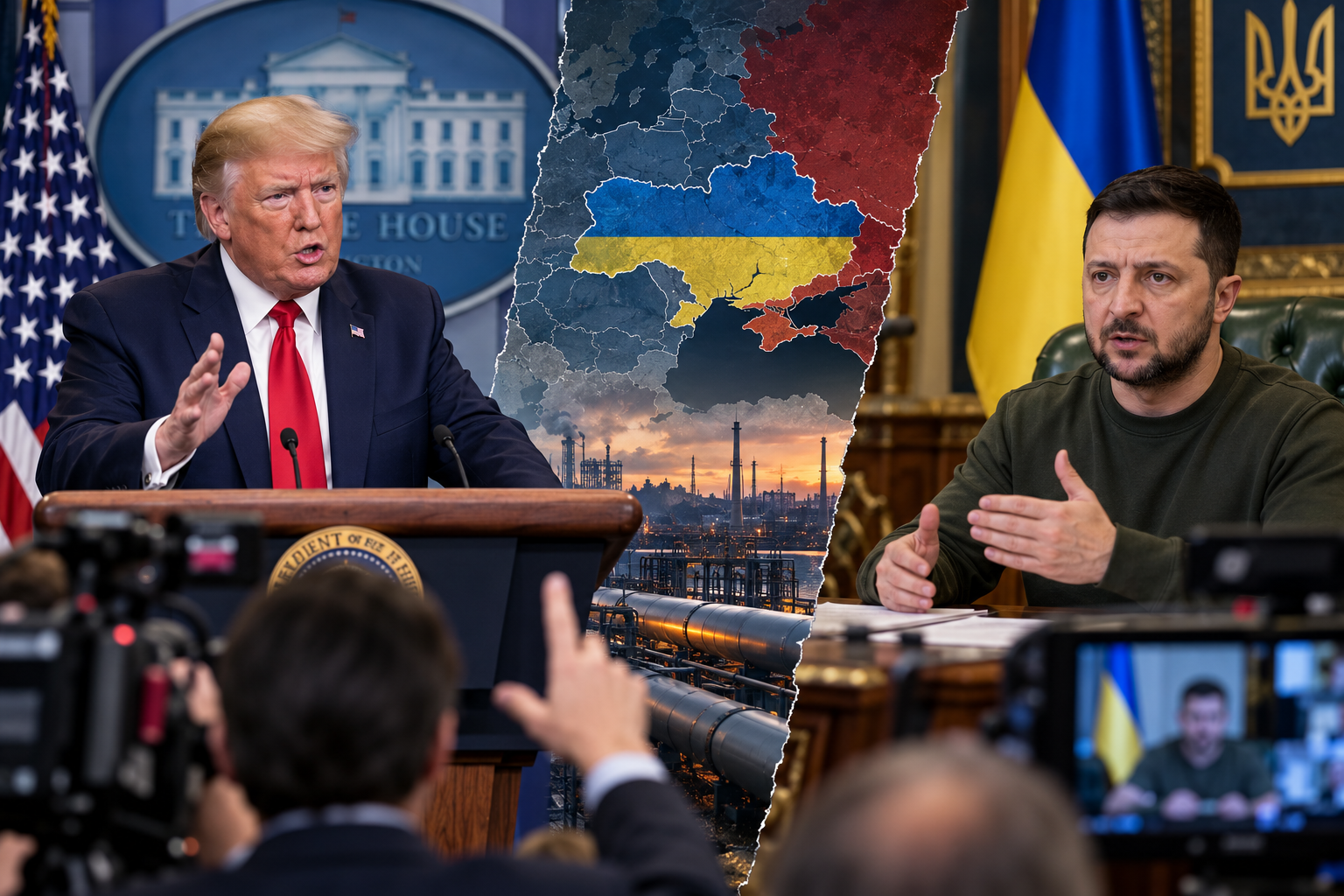
Subheadline: President Donald Trump has questioned Volodymyr Zelenskyy’s leadership while announcing a supposed halt to Russian and Ukrainian attacks on energy infrastructure. Kyiv says it is willing to participate, but Moscow has not confirmed the proposed truce, and Russian strikes on Ukrainian energy facilities have continued.
WASHINGTON — October 12, 2026 — President Donald Trump has intensified his criticism of Ukrainian President Volodymyr Zelenskyy, saying Ukraine may need a new leader as his announcement of an immediate “energy ceasefire” between Russia and Ukraine faces mounting uncertainty.
The latest developments have created a fresh diplomatic challenge for Washington. Trump says both countries have agreed to stop attacking each other’s energy infrastructure, but Ukraine says Russian strikes continued after the announcement, while the Kremlin has not confirmed that a ceasefire is in effect.
The dispute comes as the United States seeks to reduce rising fuel prices, Russia continues its war against Ukraine, and Kyiv presses Washington to ensure that any agreement is reciprocal and enforceable. (Reuters)
Trump Questions Zelenskyy’s Leadership
Trump’s comments followed days of growing tension between Washington and Kyiv over Ukrainian attacks on Russian oil refineries.
On Saturday, October 10, Trump said Ukraine should get a new president, arguing that Zelenskyy had not done enough to end the war. He also blamed Ukrainian attacks on Russian oil facilities for contributing to high U.S. diesel prices.
Trump’s remarks marked another escalation in his public criticism of the Ukrainian leader, who has repeatedly called for stronger international pressure on Moscow rather than concessions that could leave Ukraine vulnerable to future attacks. (Associated Press)
Zelenskyy responded that choosing Ukraine’s president is a decision for Ukrainian citizens, not foreign governments. He also said Ukraine could organize elections if Russia agreed to a 60-day comprehensive ceasefire, allowing authorities to address the security challenges associated with holding a nationwide vote during wartime.
Ukraine has been under martial law since Russia launched its full-scale invasion in February 2022. The country’s constitution bars elections while martial law remains in force, and millions of displaced citizens, occupied territory and security risks present additional logistical obstacles.
Trump’s criticism has therefore added a political dimension to an already difficult negotiation over ending the war.
Trump Announces an Immediate “Energy Ceasefire”
On Sunday, October 11, Trump announced on social media that Russia and Ukraine had agreed to stop attacking energy infrastructure, declaring that the arrangement would take effect immediately.
However, his announcement provided few details about the terms, monitoring arrangements or enforcement mechanisms.
Neither Moscow nor Kyiv had publicly confirmed a fully agreed and operational ceasefire at the time of the announcement.
Zelenskyy initially said the proposal was news to him, but later made clear that Ukraine would support a mutual halt to attacks on energy facilities if Russia honored the same conditions. He urged Washington to press Moscow to accept and implement the arrangement.
The Kremlin’s response remained cautious. On Monday, spokesman Dmitry Peskov said contacts were ongoing, without confirming that Russia had accepted the proposed ceasefire. He also rejected Zelenskyy’s proposal for a 60-day comprehensive truce, arguing that Moscow wanted a longer-term peace settlement instead. (Associated Press)
The conflicting statements leave key questions unanswered, including whether both governments have agreed to the same conditions and how alleged violations would be addressed.
Russian Strikes Continue After the Announcement
The proposed truce faced an immediate test as Ukrainian officials reported further attacks on energy infrastructure.
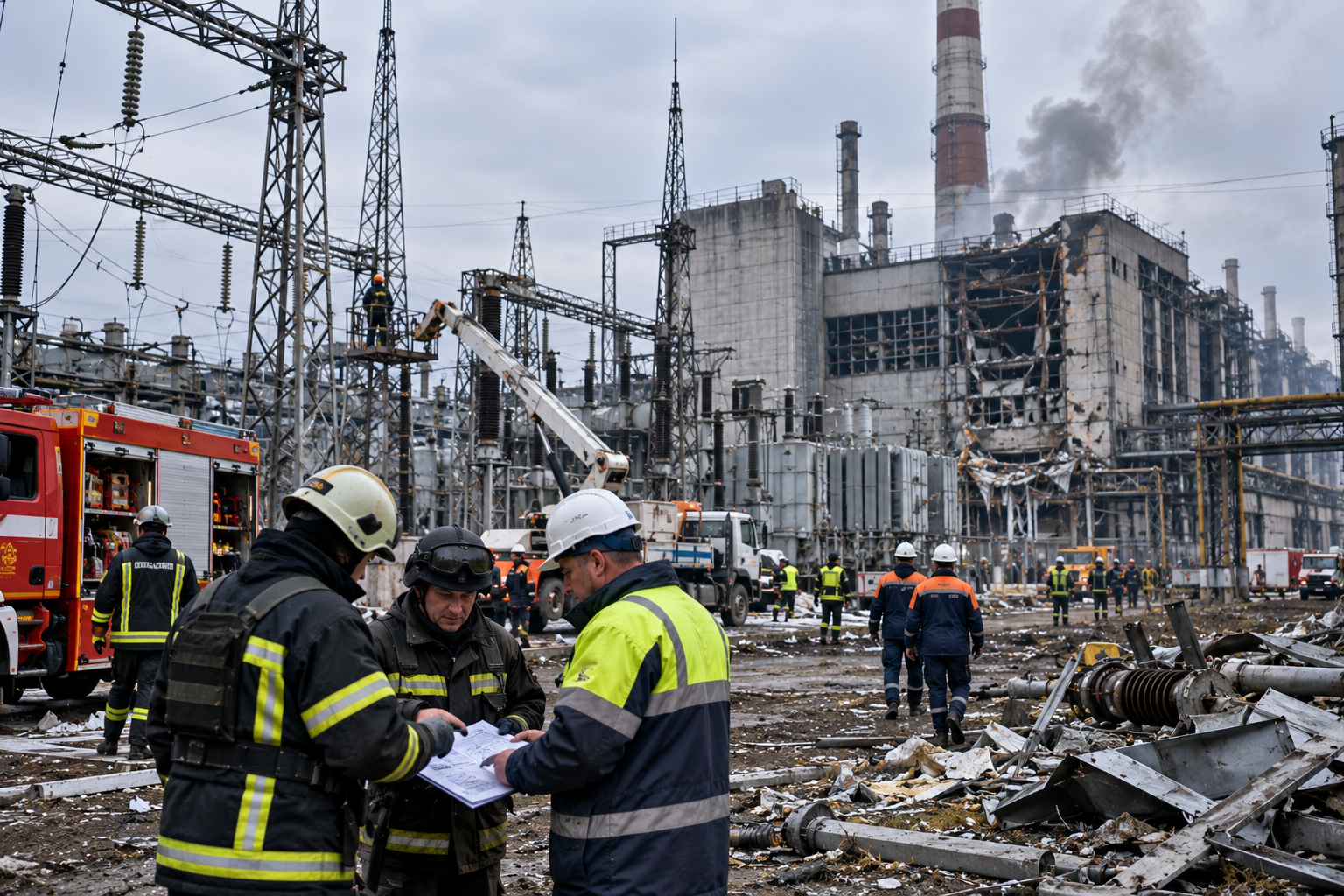
Zelenskyy said Russian drones and other weapons struck targets across Ukraine after Trump’s announcement, including a power plant in Kharkiv, a gas production facility and a civilian petrol station.
Reuters reported on Monday that overnight Russian attacks killed several people and wounded dozens across Ukraine. Ukrainian officials described the strikes against energy facilities as violations of the ceasefire Trump had announced. (Reuters)
Zelenskyy said Ukraine had not attacked Russian refineries overnight and reiterated that Kyiv was prepared to stop such operations if Moscow stopped targeting Ukraine’s energy system.
He argued that the proposed arrangement could become an important step toward peace if the United States helped ensure Russia’s compliance.
For Ukraine, protecting power stations, gas infrastructure and heating systems is particularly important as colder weather approaches. Repeated attacks can disrupt electricity supplies, damage essential infrastructure and leave civilians facing difficult living conditions.
Russia has previously targeted Ukrainian energy facilities during the war, while Ukraine has carried out strikes against Russian oil refineries and other infrastructure supporting Moscow’s economy.
Energy Prices Complicate the Diplomatic Dispute
The ceasefire announcement follows Trump’s controversial move to pursue Russian diesel supplies as U.S. fuel prices rise.
The president has argued that Ukrainian attacks on Russian refineries contribute to higher diesel prices, an issue that could affect American consumers and businesses ahead of the November 3 midterm elections.
The administration’s proposed diesel arrangement has drawn criticism from Ukrainian officials and some American lawmakers, who argue that additional Russian energy revenue could help finance Moscow’s military operations.
The dispute places Washington in a difficult position: it wants to reduce domestic fuel costs while attempting to negotiate an end to Russia’s war against Ukraine.
Energy infrastructure has consequently become both a military target and a central element of the diplomatic negotiations.
European Allies Express Doubts
European officials have welcomed the possibility of a pause in attacks but remain skeptical about whether Russia will comply.
European Union foreign policy chief Kaja Kallas said there was little evidence that Moscow would respect the proposed arrangement. She also argued that a meaningful ceasefire should protect people from attacks, not simply focus on energy infrastructure.
German Chancellor Friedrich Merz called for continued pressure on Russia, arguing that Moscow would negotiate seriously only if it faced sufficient consequences for its actions. The European Union has also approved additional sanctions targeting Russia’s military-industrial complex. (Reuters)
Their comments underscore concerns that an announcement without clear conditions, verification and consequences for violations may do little to change battlefield behavior.
What Happens Next?
The immediate question is whether Washington can turn Trump’s announcement into an enforceable agreement accepted by both Moscow and Kyiv.
Ukraine says it is ready to halt attacks on Russian energy infrastructure if Russia stops targeting Ukrainian facilities. Russia, meanwhile, has said discussions are continuing but has not publicly confirmed that a mutual energy ceasefire is in force.
For now, Trump’s announcement should not be mistaken for a fully verified ceasefire agreement. Russian attacks have continued, the Kremlin has not confirmed acceptance of the proposed terms, and major disagreements remain over the wider war.
Trump’s criticism of Zelenskyy has added further uncertainty to the diplomatic process, particularly as Ukraine insists that decisions about its leadership belong to its citizens.
The coming days will test whether the United States can secure specific commitments from both sides—or whether the proposed energy truce becomes another unfulfilled attempt to reduce the fighting.
The central challenge remains unchanged: stopping attacks on energy infrastructure may reduce some immediate risks, but a lasting peace will require agreement on terms both Russia and Ukraine are prepared to honor.



