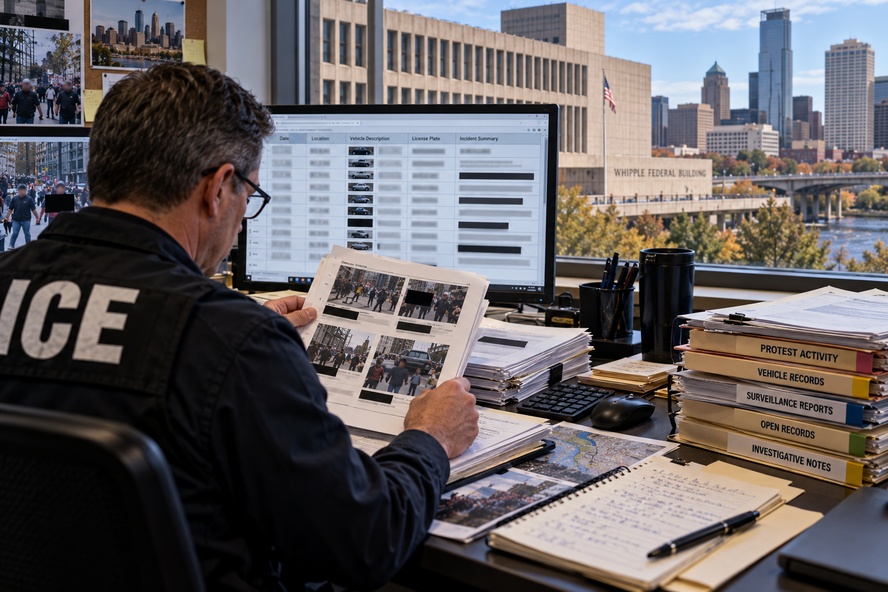
Subheadline: Records obtained through a federal lawsuit reveal a 60-entry “Agitator Log” documenting encounters between immigration officers and protesters. The findings raise new questions about government surveillance, First Amendment rights and official denials of a protester database.
WASHINGTON — October 13, 2026 — A new investigative report has revealed that U.S. Immigration and Customs Enforcement (ICE) maintained a database documenting encounters with protesters and legal observers in Minneapolis, raising fresh concerns about government surveillance and the constitutional rights of Americans who monitor federal immigration enforcement.
The investigation, published by USA TODAY on October 9, uncovered an internal document titled “Agitator Log” after the newspaper sued ICE under the Freedom of Information Act. The database contains 60 recorded incidents involving protesters and legal observers near the Whipple Federal Building in Minneapolis during spring 2026. (USA TODAY)
The records emerged after months of public denials by federal officials who had insisted that ICE was not maintaining a database tracking protesters. The findings have intensified questions about what information federal agents collect, how the information is used and whether people exercising their constitutional rights could face additional scrutiny.
What Was Inside the “Agitator Log”?
According to the investigation, the database documented encounters between ICE officers and people monitoring federal immigration operations around the Whipple Federal Building, which became a focal point for protests during the winter and spring.
The records included descriptions of encounters, vehicle information, license plates, photographs of vehicles and notes about what happened afterward. Personal identifying information was redacted in the records released to the newspaper.
Some entries described relatively ordinary encounters, including officers reporting that someone had followed their vehicle. Others alleged that people drove erratically, followed agents across state lines or created potentially dangerous situations.
The records do not establish that every person documented in the database committed a crime. In fact, investigators found that some entries described conduct that, on its face, could be lawful.
That distinction is central to the controversy: following federal officers at a reasonable distance or recording them in public is generally lawful, but reckless driving, stalking or physically interfering with law enforcement can cross legal boundaries. (Reuters)
Man Says His Travel Privileges Were Revoked
The investigation also detailed the experience of Michael Khalili, a Minneapolis-area legal observer who says he believes ICE’s monitoring affected him personally.
Khalili had been documenting federal immigration officers and following their movements at a distance. He told USA TODAY that his Global Entry status was revoked one day after an encounter with ICE agents in March. Global Entry is a program that allows approved travelers to receive expedited processing when entering the United States.
Khalili also reported receiving additional screening when he returned from international travel later in the year. He suspects the scrutiny was connected to his activities observing immigration officers.
The database did not identify individuals by name in the released copy. However, its entries included information about vehicle types and encounters that Khalili said matched his experiences, including references to a black Hyundai SUV.
The records do not independently establish that ICE caused the revocation of Khalili’s Global Entry privileges or that his later airport screening was retaliation. Those remain allegations that would require further evidence to confirm.
Khalili has joined legal efforts challenging the government’s actions, arguing that people should be able to observe law enforcement without fear of punishment for lawful activity. (USA TODAY)
The Findings Contradict Earlier Government Denials
The revelations have created a difficult question for the Department of Homeland Security, which oversees ICE.
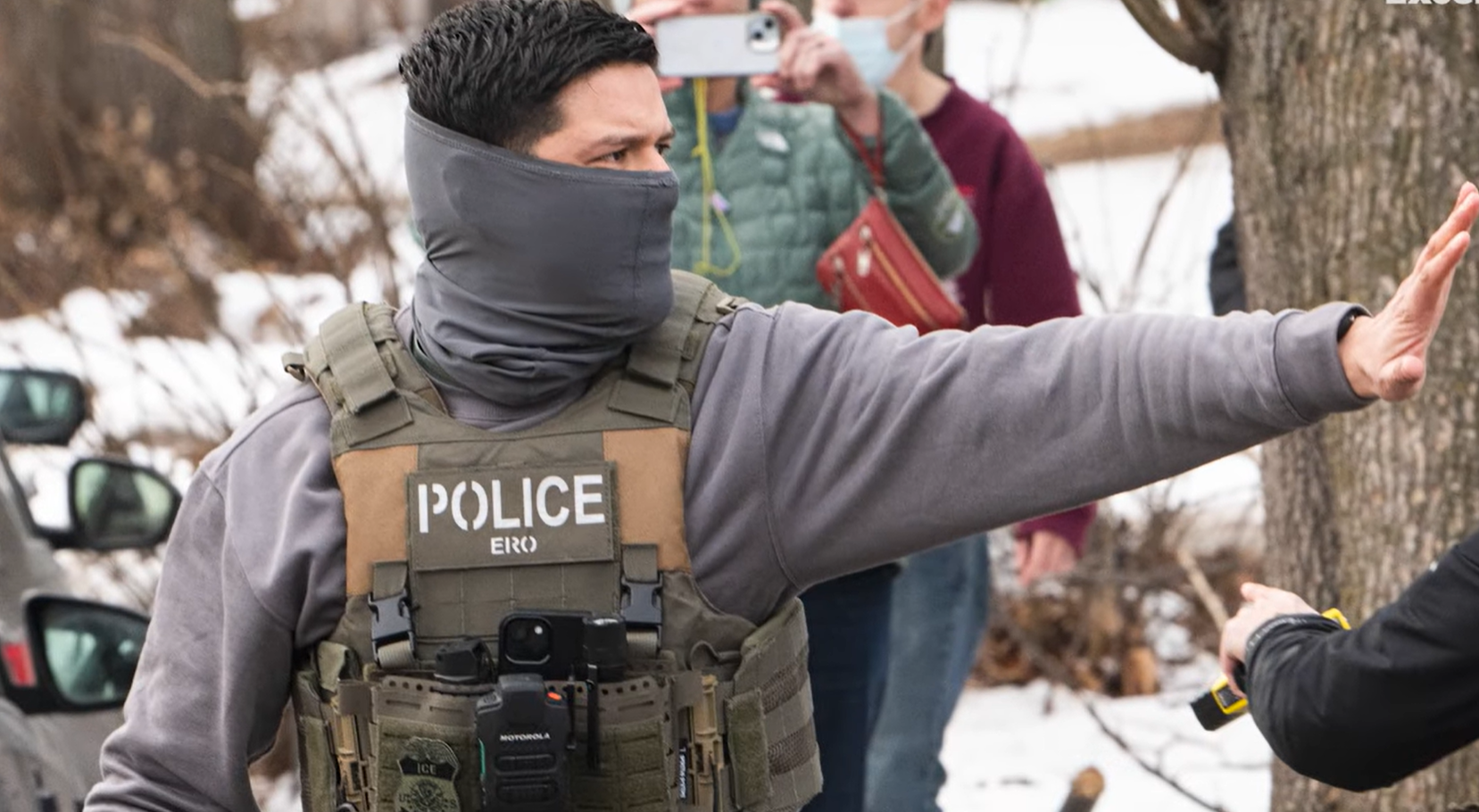
Officials had repeatedly denied that ICE was maintaining a database of protesters. In earlier statements, the agency distinguished between monitoring genuine threats against officers and collecting information on people participating in protests.
A separate development in Maine added to those concerns. A court filing unsealed on October 2 revealed that ICE had uploaded photographs of protesters to a system known as Investigative Case Management. An officer also referred to a “Master List of Agitators,” although the full list remained under court seal.
In a widely circulated video described in the reporting, a masked ICE officer told a protester that the person was being added to a database and labeled a domestic terrorist. Acting ICE Director Todd Lyons subsequently said he was unsure what the officer meant and denied that protesters were being tracked in the manner alleged. (USA TODAY)
The Minnesota records now provide additional evidence that information about protesters was being collected and organized by ICE personnel. However, they do not answer every question about whether the Minneapolis log and the Maine records were part of a single national system.
First Amendment Concerns Grow
The case has raised broader questions about the First Amendment, which protects freedom of speech and peaceful assembly.
Legal observers often monitor immigration enforcement to document arrests, record encounters and alert communities about federal operations. Such activity can provide public oversight of government conduct, particularly when enforcement actions occur in residential neighborhoods.
Legal experts cited in the investigation warned that collecting information about people solely because they engage in protected speech could raise constitutional concerns.
The potential effect goes beyond the individuals whose information appears in a database. If people believe that recording officers or attending protests could put them under government scrutiny, they may become less willing to exercise their rights.
At the same time, federal authorities maintain that officers must be able to investigate threats, harassment, stalking and attempts to obstruct lawful operations.
The challenge is determining where legitimate law enforcement activity ends and improper monitoring of protected expression begins.
How the Records Were Obtained
The documents were not voluntarily released following a routine public inquiry.
USA TODAY first requested the records in January 2026 under the Freedom of Information Act. After ICE denied the request and an appeal failed, the newspaper filed a lawsuit in federal court in Washington in July.
The records were provided to the newspaper in October through the legal process.
The investigation’s publication prompted renewed questions for ICE and DHS. The newspaper reported that it had not received an official explanation of how the database fit with the agencies’ previous public statements denying that protesters were being tracked.
What Happens Next?
The disclosures could lead to further congressional scrutiny and additional litigation over government surveillance and the treatment of people monitoring immigration enforcement.
Important questions remain unanswered, including how widely the practice was used, who had access to the records, how long information was retained and whether any individuals suffered consequences because their details appeared in the log.
The records establish that ICE personnel documented dozens of encounters with protesters and legal observers in Minneapolis. They do not, by themselves, prove that every person recorded was targeted unlawfully or that a nationwide database of all protesters existed.
The larger issue remains whether federal agencies can collect and use information about people engaged in lawful protest without improperly chilling their constitutional rights.
As scrutiny grows, the government may face increasing pressure to explain its practices and clarify how it distinguishes legitimate investigations from the monitoring of protected political activity.



