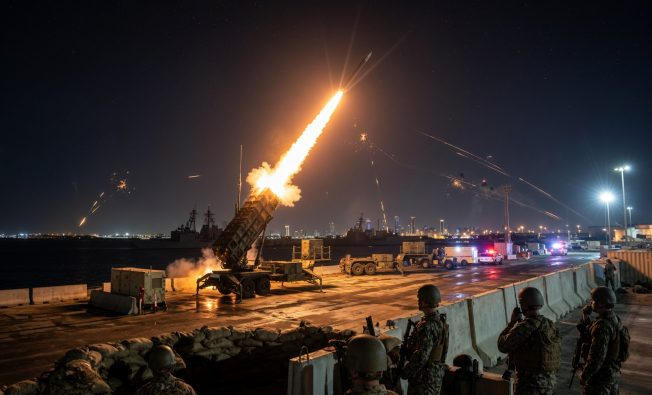
1. Are New Iranian Barrages Happening Right Now?
The first distinction is important: the latest reporting confirms extensive Iranian attacks earlier in 2026, but does not independently establish a new, simultaneous missile-and-drone barrage against all four countries on November 5.
On November 4, Reuters reported that Iranian military officials were updating their target lists amid concerns that President Trump could authorize additional U.S. strikes. Four European officials told Reuters that American forces were positioned to conduct military action at short notice.
Iran has warned that any renewed American attack could trigger retaliation extending beyond established geographic boundaries. The situation has therefore become increasingly volatile, even without confirmation of a new regional barrage.
2. A New Picture of Damage Across 26 Military Sites
An Associated Press investigation published in early November used commercial satellite imagery and interviews with regional military officials to examine the consequences of Iran’s attacks.
Its findings were significant: more than 115 missile and drone strikes claimed by Iran or Iranian-backed militias had damaged or destroyed structures at 26 U.S. military bases and other locations through August 2026.
The investigation found that attacks initially concentrated on systems designed to detect incoming threats. Later strikes damaged aircraft, hangars, warehouses, fuel facilities, communications equipment, and buildings used by American personnel.
The Pentagon has released limited information about the full extent of the destruction, citing operational security. Nevertheless, AP independently verified numerous damaged facilities using satellite imagery from multiple providers.
3. Kuwait and Bahrain: Important American Military Positions
Kuwait experienced particularly heavy attacks.
Ali Al Salem Air Base was reportedly struck at least 30 times, with satellite imagery showing extensive damage to aircraft hangars and other structures. Camp Buehring also suffered serious destruction, including damage to troop facilities.
The March 1 attack at Port Shuaiba in Kuwait killed six American soldiers, making it the deadliest known strike against U.S. personnel during the conflict described in the AP investigation.
Bahrain is another strategically important location because it hosts U.S. Naval Support Activity Bahrain, headquarters of the U.S. Navy’s Fifth Fleet.
AP reported that Iranian strikes damaged radar-related infrastructure at the naval installation during the early stages of the conflict. Iran subsequently claimed additional drone attacks against installations associated with American forces in Bahrain. Those individual operational claims should be distinguished from independently verified damage.
4. Qatar and the United Arab Emirates Face Continuing Risks
In Qatar, Al Udeid Air Base serves as a major American military installation and regional air operations center.
The AP investigation reported significant damage to an early-warning radar system in Qatar, although it remained unclear whether the equipment had been completely destroyed.
In the United Arab Emirates, Al Dhafra Air Base, located south of Abu Dhabi, was also repeatedly targeted during the conflict’s earlier stages.
Satellite imagery showed damage to aircraft hangars, while regional officials described damage affecting radar equipment and surveillance drones.
Iran also claimed missile and drone attacks against American-associated positions at Al Minhad Air Base in the UAE and installations supporting U.S. forces in Kuwait during September. Those claims require careful attribution rather than automatic acceptance as confirmed damage.
5. Why Iran Targeted Radar and Air-Defense Infrastructure
One of the most important findings concerns the apparent targeting sequence.
According to AP’s investigation, Iranian attacks initially focused on early-warning radar systems and other equipment intended to detect incoming missiles and drones.
These systems are essential to a modern air-defense network. They help identify approaching threats, estimate their direction, and provide information to interceptor systems and military commanders.
When radar coverage is damaged, military installations may have less warning time and greater difficulty coordinating defensive responses. This can complicate protection against subsequent attacks involving ballistic missiles and unmanned aircraft.
The attacks also revealed a broader vulnerability: even expensive military bases with sophisticated defenses can face significant challenges when confronted by repeated, relatively inexpensive drone attacks.
6. The Strait of Hormuz Adds Another Dimension
The crisis extends beyond military installations.
The Strait of Hormuz is one of the world’s most important energy transportation routes, connecting the Persian Gulf with international shipping lanes.
The U.S. Maritime Administration currently warns that risks to commercial vessels remain high, including threats involving missiles, armed drones, and unmanned surface vessels.
On November 5, Iran’s Revolutionary Guard claimed that two oil tankers and a tugboat had caught fire in separate incidents in the strait. The claim highlights continuing maritime danger but should not be treated as independently verified in every detail.
The International Maritime Organization continues to monitor confirmed shipping incidents and the safety of seafarers throughout the region.
7. Could the Conflict Escalate Again?
The latest situation presents a difficult challenge for Washington and its regional partners.
American officials must consider protecting military personnel, restoring damaged infrastructure, maintaining missile-warning systems, and safeguarding international shipping.
Iran, meanwhile, has warned that renewed U.S. military action could trigger further retaliation.
The United States has significant military resources in the region, but the damage documented by satellite imagery demonstrates that maintaining those installations during a prolonged missile-and-drone conflict carries substantial risks.
The biggest concern is that another escalation could expose American military infrastructure and Gulf energy facilities to a new round of attacks.
For now, the region remains on high alert. Whether the current tensions lead to renewed negotiations or another military confrontation will have consequences far beyond the Persian Gulf.



